Toe Walking and Autism: When to Watch and When to Act
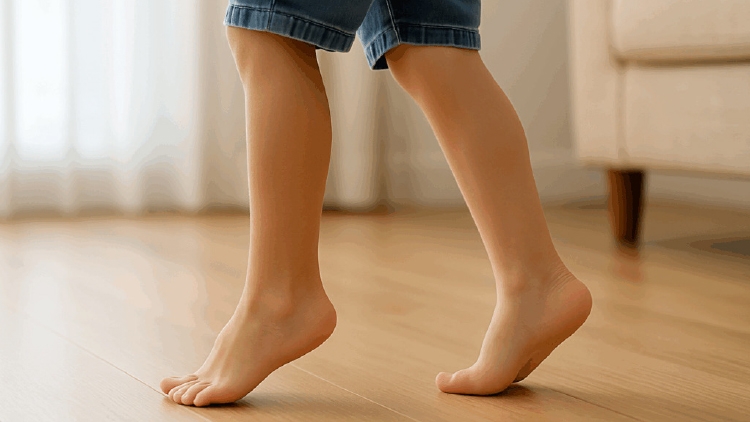
Toe walking is something many parents notice early on, often during the toddler years. While toe walking can appear in any child, it is especially common in children on the autism spectrum. For some families, it’s a brief phase that resolves on its own. For others, it becomes a persistent pattern that raises questions and concerns.
Toe walking is more common in autistic children for several reasons. Many experience differences in sensory processing, muscle tone and motor planning. Walking on the toes can provide extra sensory input through the feet and ankles, which may feel regulating or comforting. Low muscle tone or coordination challenges can also make heel-to-toe walking feel more difficult or unstable. Importantly, toe walking in autism is not a behaviour problem, it is a child’s way of navigating their body and environment. In younger children, especially under the age of three, toe walking can be a normal developmental phase. Many toddlers experiment with different walking patterns as they gain strength and balance. Occasional toe walking, especially when excited or barefoot, is usually not a concern if a child can also walk with their heels down when prompted.
However, toe walking may need further attention when it becomes consistent or starts to interfere with daily life. Signs that support may be helpful include toe walking that persists beyond early childhood, tightness in the calves or ankles, frequent tripping or falling, pain, fatigue with walking or difficulty keeping up with peers.
Physiotherapists, occupational therapists and orthotists may work together to understand why a child is toe walking and what supports would be most helpful. Orthotic devices are not about forcing a child to walk “normally.” Instead, they are designed to gently support alignment, provide stability and encourage more efficient movement. For some children, orthotics help reduce strain on muscles and joints, making walking more comfortable and less tiring. For others, they provide sensory feedback that helps the body understand where it is in space. Orthotics can also help prevent long-term complications related to tight muscles or altered gait patterns.
For families navigating toe walking and autism, the goal is not perfection—it’s comfort, participation and confidence. With the right support, children can move through their world in ways that feel safer and more enjoyable, one step at a time.
The Custom Orthotics Team (519) 850-4721 | office@customorthoticsoflondon.com | @cool_bracing