Helmet Therapy for Babies: What to Expect
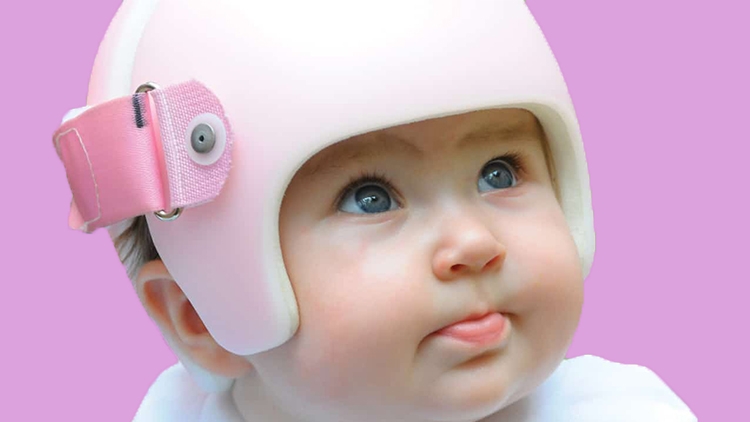
If you’ve been following along with this series, you’ve learned how tummy time, positioning and neck movement all play a role in your baby’s development and head shape. For some babies, despite these efforts, head shape differences may persist. When that happens, parents are often introduced to helmet therapy—also known as a cranial remolding orthosis.
Hearing that your baby may need a helmet can feel overwhelming. The good news is that helmet therapy is a safe, well-established and effective way to help guide your baby’s head growth into a more symmetrical shape during a period of rapid development.
A baby’s skull is still soft and rapidly growing, especially in the first year of life. The helmet does not squeeze or reshape the head but instead provides space in areas where growth is needed, while limiting growth in more prominent areas. Over time, this encourages a more balanced shape.
Helmet therapy may be considered when:
- Head shape asymmetry is moderate to severe
- Flattening is not improving with repositioning and/or physiotherapy
- Your baby is typically between 5–6 months or older, when head growth can still be guided effectively
The process begins with an assessment by a certified orthotist. This typically includes detailed measurements or a 3D scan of your baby’s head to evaluate shape and symmetry. If a helmet is recommended, it is custom-made to fit your baby comfortably.
Once fitted, babies usually wear the helmet for about 23 hours per day, with time out for bathing and cleaning. Regular follow-up appointments are scheduled to adjust the fit as your baby grows and changes.
Parents are often surprised by how quickly babies adapt. Helmets are lightweight and most babies adjust within a few days. They can still sleep, play and meet developmental milestones while wearing the helmet. Treatment length varies depending on your baby’s age and the severity of asymmetry, but many babies wear a helmet for several months. Starting earlier often means shorter treatment times.
Choosing helmet therapy can feel like a big decision, but it’s important to remember that you’re not alone in the process. Your care team will guide you every step of the way, ensuring your baby is comfortable and progressing well. With the right timing and support, helmet therapy can be a simple and effective step toward improving head shape and supporting your baby’s overall development.
The Custom Orthotics Team (519) 850-4721 | office@customorthoticsoflondon.com | @cool_bracing