5 Signs Every Parent Should Know About Scoliosis
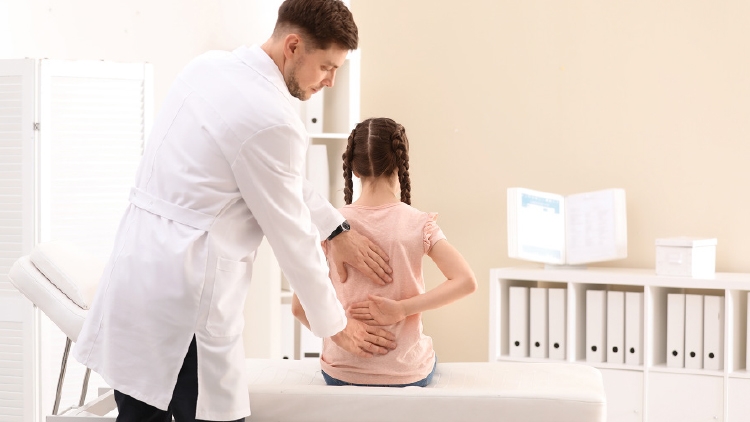
September is Scoliosis Awareness Month, making it a great time for parents and caregivers to learn about the signs of scoliosis and when to seek an assessment. Scoliosis is a sideways curvature of the spine that most commonly develops during periods of rapid growth, particularly around puberty. Many children with scoliosis do not experience pain, so parents may be the first to notice changes in their child’s posture or appearance.
Here are five signs to look out for:
- Uneven Shoulders
Does one shoulder appear higher than the other? You may notice that your child’s backpack straps sit unevenly. While some asymmetry can be normal, a noticeable or persistent difference may warrant further assessment. - One Shoulder Blade Is More Prominent
When looking at your child’s back, one shoulder blade may appear to stick out more than the other. This difference can sometimes become more noticeable when your child bends forward. - Uneven Hips or Waist
Look at your child’s waist and hips from behind. Does one hip appear higher? Is there more space between one arm and the waist on one side? - Clothing Hangs Unevenly
Sometimes the first clue is simply the way clothing fits. A shirt may consistently twist to one side, a dress may hang unevenly, or pant legs may appear to be different lengths. - Your Child Leans to One Side
A child with scoliosis may appear to lean slightly to one side when standing. Their head may also appear off-center relative to their hips or pelvis.
What Should You Do If You Notice These Signs?
Seeing one of these signs does not necessarily mean your child has scoliosis. Children naturally have differences in posture and body symmetry. However, if you notice persistent changes, it’s worth discussing them with your child’s healthcare provider. They can perform a physical examination and further assessment or imaging if needed. If scoliosis is diagnosed and bracing is recommended, an orthotist can work with your child’s healthcare team to design and fit a custom brace.
Early detection allows scoliosis to be monitored and, when appropriate, treated during growth. If you have concerns about your child’s posture or spinal alignment, don’t hesitate to ask their healthcare provider for an assessment.
The Custom Orthotics Team (519) 850-4721 | office@customorthoticsoflondon.com | @cool_bracing