Building Balanced Meals and Snacks
As parents, we all want to support our children’s growth, development and overall well-being. One of the most effective ways to do that is by serving balanced meals and snacks at home. Canada’s food guide (www.food-guide.canada.ca/en/) offers practical guidance to support families as they inspire lifelong positive eating habits.
Balanced meals and snacks provide the nutrients children need to grow, focus in school, stay active and feel their best. Planning with variety in mind also helps build a positive relationship with food and encourages children to try new flavours and textures.
What Does a Balanced Meal Look Like?
When planning meals, aim to include:
- at least one vegetable or fruit
- one whole grain food
- one protein food
- a glass of milk or fortified plant-based beverage
Use Canada’s Food Guide plate as a visual tool and aim for:
- half the plate: vegetables and fruits
- one-quarter: whole grain foods
- one-quarter: protein foods (choose plant-based proteins more often, such as beans, lentils, tofu or nuts)
Building Balanced Snacks
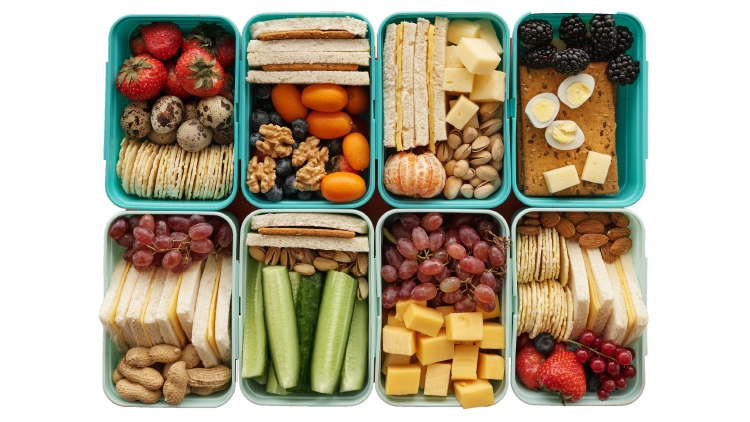
Create a satisfying snack by including:
- one fruit or vegetable, and
- one protein or whole grain food
Snack Ideas:
- morning: Apple slices with Greek yogurt
- afternoon: Hummus with carrot sticks and cucumber slices
Other Considerations
Help your child meet their nutritional needs by offering:
- Daily:
- one dark green vegetable (e.g., spinach, broccoli)
- one iron-rich protein (e.g., lean meats, beans, lentils)
- one calcium-rich food (e.g., dairy products, fortified plant-based beverages)
- Weekly:
- one plant-based protein meal (e.g., chickpea curry, lentil soup)
- one meal with eggs or fish
Routine and Connection Matter
Children thrive on routine. Offering meals and snacks every two to three hours helps keep their energy levels stable. In between, make sure water is always available to keep them hydrated.
Involving your children in meal planning and food prep not only teaches valuable life skills but also makes them more likely to try the foods. Whenever possible, eat together as a family. Shared mealtimes are a great opportunity to connect and model healthy eating habits.
Looking for more Ideas? Canada’s Food Guide website offers helpful videos and tips for families, including:
Eat together using Canada’s food guide plate – https://www.canada.ca/en/health-canada/services/video/food-nutrition/plate-eat-together.html
Healthy snacks using Canada’s food guide plate – https://www.canada.ca/en/health-canada/services/video/food-nutrition/plate-healthy-snacks.html
References
Canada Food Guide (2024). Make Healthy Meals with Canada’s Food Guide. Making healthy meals with Canada’s food guide plate Retrieved from https://food-guide.canada.ca/en/tips-for-healthy-eating/make-healthy-meals-with-the-eat-well-plate/
Canada Food Guide (2024). Healthy Eating for Parents and Children. Healthy eating for parents and children – Canada’s Food Guide Retrieved from https://food-guide.canada.ca/en/tips-for-healthy-eating/parents-and-children/
Submitted by Claire Bilik, RD from the Middlesex-London Health Unit