Flat Head Syndrome: What Parents Need to Know
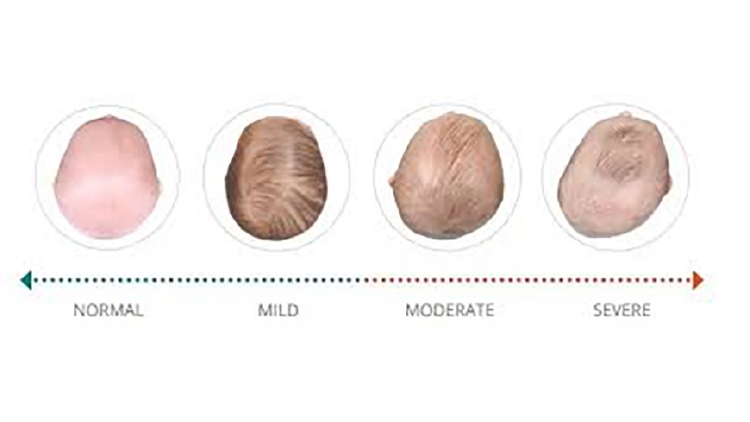
If you read last month’s article on side preference and neck tightness, you may already have an idea of how positioning can affect your baby’s development. One of the most common things parents begin to notice is a flattening on one side of their baby’s head, often referred to as flat head syndrome, or plagiocephaly.
Plagiocephaly is very common, especially since babies are placed on their backs to sleep. You might notice a flat spot on the back or side of your baby’s head, or that their head shape looks slightly uneven from above. While this can be concerning to see, it’s important to know that in many cases, it can improve with early intervention.
The first step is often simple, consistent repositioning throughout the day:
- Increase supervised tummy time to reduce pressure on the back of the head
- Alternate the direction your baby lies in the crib
- Encourage your baby to turn toward their non-preferred side
- Limit extended time in car seats, swings or bouncers when possible
It may be worth checking in with your healthcare provider if you notice:
- A flat spot that is becoming more noticeable over time
- Facial asymmetry (such as one ear or forehead appearing more forward)
- A strong preference for turning the head one way
- Little improvement despite repositioning efforts
Your pediatrician or family doctor can help guide next steps. In many cases, babies are first referred to a pediatric physiotherapist to address underlying movement or neck concerns, such as limited range of motion or side preference.
As your baby grows, the head shape can continue to change. If flattening persists, worsens or is more significant, particularly around 5–6 months of age, helmet therapy (a type of orthotic treatment) may be recommended to help guide head growth into a more symmetrical shape.
While many cases of plagiocephaly are mild and improve over time, more significant asymmetry has been associated with challenges such as jaw alignment, visual tracking, ear positioning and other developmental considerations. Early awareness and appropriate support can help reduce these risks and support the best possible outcomes.