To Visit or Not to Visit?
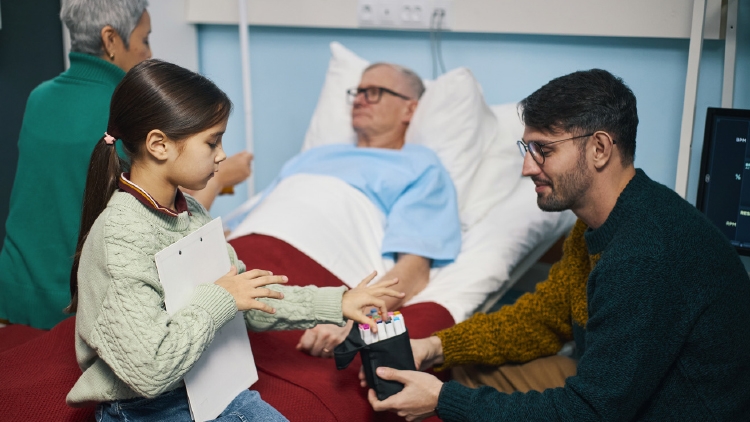
Bringing children to visit a sick relative in the hospital can feel like a tough decision. Generally, when a child is prepared for the visit, it is recommended, as it does more good than harm. Children benefit from seeing their loved ones in various ways:
It can reduce their anxiety related to using magical thinking. When they are left in the dark, they often picture situations that are far worse than reality.
It helps in processing intense emotions. Direct exposure helps children comprehend illness and start to process grief naturally, preventing them from feeling isolated, confused or left out.
It maintains family connections. Regular contact preserves strong family bonds and protects children from feelings of abandonment or helplessness during a stressful time.
Potential risks to children visiting sick loved ones
1.Medical environments can occasionally cause distress if a child is not prepared for the hospital visit.
2. Sensory overload can occur in certain medical environment like ICUs which are filled with flashing monitors, loud beeping machines and medical tubes. This can be quite overwhelming for a young mind.
3.An increase anxiety can occur if a child isn’t properly prepared with an age-appropriate explanation which will address any magical thinking.
Best Practices for a Smooth Visit
To ensure the experience is healing for all, use these tips before and during your hospital trip:
Always give them a choice: Never force a child to visit if they express fear or say they are not ready.
Prepare them beforehand: Describe exactly what the room will look like. Explain what the machines do in simple terms and warn them if their relative looks or sounds different.
Keep visits brief: Attention spans and emotional tolerance are short; be ready to leave the room the moment your child feels overwhelmed.
Offer alternative connections: If an in-person visit is too overwhelming, encourage your child to connect through video calls, drawing a picture or sending a recorded voice message.
Every hospital situation is unique, and a child’s reaction depends heavily on their development. Prepare the child as much as possible and learn from each visit.
Becky Morrison is a Nurse Practitioner and certified ATTCS advanced clinical trauma therapist with a specialty in grief. She is finally, after years of infertility, a doting mother to one little boy, and fur mom of her gentle giant, Stella. She is, and always will be, a strong advocate for mental wellness at all ages.